
How to Lose Chest Fat at Home: Six Steps for a Complete Routine
How to Lose Chest Fat as a Man: 6 Steps That Work › How to Lose Chest Fat at Home: Six Steps for a Complete Routine
The short answer
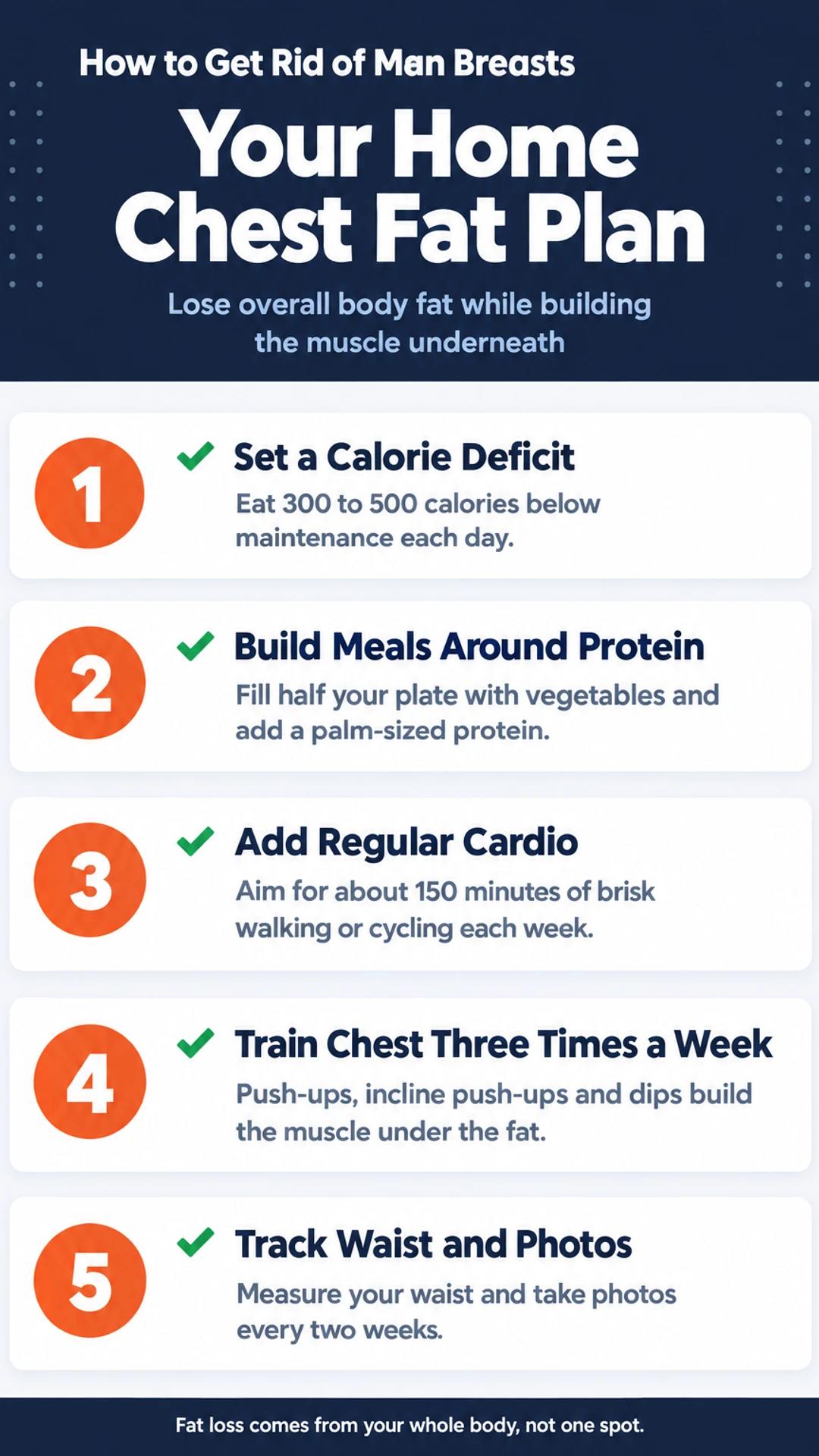
To lose chest fat at home, you need to reduce overall body fat, because you cannot burn fat from one area alone. Eat in a moderate calorie deficit with plenty of protein, cut back on processed food and sugar, and combine regular cardio with bodyweight chest exercises such as push-ups, incline push-ups and dips. Track your waist and progress over several weeks rather than daily.
By the end of this guide, you will have a complete home routine: two or three strength sessions a week, a few cardio sessions you can actually sustain, and a simple eating plan built around protein and a modest calorie deficit.
Most of what you will read online about chest fat focuses on one exercise or one shortcut. We have taken a wider view and laid out how the pieces fit together, so the chest work, the cardio and the diet support each other rather than competing for your time.
This guide is based on published exercise and nutrition guidance and on what people commonly report, not on our own testing.
You will know exactly which exercises to start with, how to progress them when they get easy, and how to set your calorie target without counting every bite forever. You will also know what to measure and how often, so you can tell whether the plan is working.
This page covers the complete home routine. For a broader look at what does and does not work, see our hub guide, How to Lose Chest Fat for Guys: What Works and What Doesn’t. If you want a shorter, timed approach, our pages on reducing chest fat in 10 days and in 30 days lay out what is realistic over each window.
Quick steps:
- Understand What Chest Fat Is and What Shifts It
- Set a Moderate Calorie Deficit
- Build Meals Around Protein and Whole Foods
- Add Cardio and Daily Movement
- Do Bodyweight Chest Exercises Three Times a Week
- Track Progress and Adjust Each Month
Step 1: Understand What Chest Fat Is and What Shifts It
Chest fat is body fat stored in the tissue over and around your pecs. It sits under the skin, the same way fat sits on your stomach, your back and your arms. That is why it is hard to target. Your body decides where to pull fat from, and it does not pick the chest because you want it to.
Here is the key point: chest fat drops as your overall body fat drops. You cannot do enough push-ups or bench presses to burn fat from one patch of skin. Strength work, including chest-focused exercises, builds and tones the muscle underneath, which helps your chest look firmer once the fat layer thins. But the fat itself goes when your total body fat goes down, usually through a steady calorie deficit combined with regular activity.
Before you commit to a routine, check whether the problem is fat or tissue. Gynecomastia is firm, glandular breast tissue, often sitting directly under the nipple, and it does not go away with diet or exercise. Chest fat is usually softer, spreads more evenly, and tends to be more noticeable on the sides and upper chest. Pinch the area: fat feels soft and loose, while glandular tissue feels firmer and more like a disc under the nipple. A doctor can tell the two apart with a simple exam, and they can check for anything that needs treatment. If you are unsure, see one first.
Set your expectations now. Your waist and overall shape usually show progress first, while the chest is often the last area to change. Track your waist measurement and photos from the same angle every two weeks, because the scale alone will not show what is happening.
Chest fat versus glandular tissue
| Feature | Chest fat | Glandular tissue |
|---|---|---|
| Feel when pinched | Soft and loose | Firmer, disc-like |
| Location | Spreads over the chest | Directly under the nipple |
| Responds to diet and exercise | Yes, as overall fat drops | No |
| Who can confirm | Self-check | A doctor, with a simple exam |
Step 2: Set a Moderate Calorie Deficit
Losing chest fat at home comes down to one thing you can control every day: eating a little less energy than your body uses. Chest exercises help the muscle underneath, but the fat over your chest shrinks only when your overall body fat drops. This step shows you how to find a daily calorie target you can keep for weeks.
Start with your maintenance estimate. Maintenance is the number of calories you burn in a typical day. A rough starting point is your body weight in pounds multiplied by 14 if you are mostly sitting at work, or by 16 if you are on your feet or active most days. A 200-pound man who sits most of the day starts near 2,800 calories.
Subtract 300 to 500 calories. For that same man, a target of 2,300 to 2,500 calories a day creates a steady deficit. A deficit of this size usually produces about half a pound to a pound of weight loss per week, which is slow enough to keep muscle and energy intact.
Track for two weeks. Use a free app or a notebook to log everything you eat and drink. Weigh yourself at the same time each morning, then compare the weekly averages.
- If the average drops by about 0.5 to 1 pound a week, keep going.
- If it does not move after two weeks, reduce intake by about 150 to 200 calories a day or add a 20-minute walk.
Crash diets promise faster results, but they cost you muscle and make the plan hard to keep. A moderate deficit is the one you can hold for the months it takes to see real change.
Step 3: Build Meals Around Protein and Whole Foods
Your chest exercises will help you build and firm the muscle underneath, but the fat sitting on top of it only shrinks when you eat in a calorie deficit. Meals are where most of that deficit comes from, so set them up to keep you full on fewer calories.
Put a protein source on every plate. Protein is the most filling macronutrient, and it helps protect the muscle you are working to build while your body body fat drops. Aim for a palm-sized portion at each meal from sources such as:
- Eggs or egg whites
- Chicken breast, turkey or lean beef
- Fish such as salmon, cod or tuna
- Lentils, chickpeas or black beans
- Plain Greek yoghurt or tofu
For example, at breakfast swap a sugary cereal for two eggs with spinach, and at lunch add a can of tuna to a salad instead of croutons and dressing.
Fill half your plate with vegetables. Load the other half with a palm-sized portion of protein and a fist-sized portion of whole grains such as brown rice, oats or wholemeal bread. Whole grains digest more slowly than white versions, so they keep hunger away for longer. Use this quick checklist at each meal:
- Half the plate: non-starchy vegetables
- Quarter: protein
- Quarter: whole grains or starchy vegetables
Cut the hidden calories. Sugary drinks, alcohol and processed snacks add calories quickly but do little for fullness. Swap soft drinks for water, sparkling water or black coffee, limit alcohol, and replace crisps and biscuits with fruit, nuts or yoghurt. This habit does more for your weight than it might seem, so it pays to keep these items out of the house.
Step 4: Add Cardio and Daily Movement
Cardio burns extra energy, and that extra energy helps your body lose fat overall, including the fat on your chest. You cannot spot-reduce fat from one area, so the aim is a bigger calorie deficit across your whole body. You can build that at home with no equipment.
Start with steady cardio. Public health guidance commonly recommends about 150 minutes a week of moderate activity. Spread that over five or six days so it feels manageable.
- Brisk walking: a pace where you can talk but not sing
- Cycling: a bike you already own, or a stationary bike if you have one
- Running or jogging: only if your joints and fitness allow it
For example, walk briskly for 30 minutes on five days a week. That adds up to 150 minutes without a gym.
Next, add one or two short interval sessions. Warm up for five minutes, then alternate 30 seconds of hard effort (fast walking uphill, or sprinting in place) with 90 seconds of easy walking. Repeat for 15 to 20 minutes.
Finally, increase your daily steps. Use a phone or a cheap pedometer, and aim to add a little more each week. Taking stairs, parking farther away, and walking during phone calls all count. Daily movement like this helps your muscles stay active and supports the changes you see in your body over time, which makes the rest of your training, including your bench press and chest exercises, work better.
Step 5: Do Bodyweight Chest Exercises Three Times a Week
Chest training helps build the chest muscles underneath the fat, so the area looks firmer and fuller as you lose weight. It will not burn fat from your chest alone, but a regular press routine is a solid part of the plan. This step covers a simple bodyweight workout you can do at home with no equipment beyond a sturdy chair or bench.
What you need:
- A kitchen counter, sturdy table or bench for incline push-ups
- A firm floor surface
- A sturdy chair or bench for dips (for beginners)
Your workout (three sessions a week, with a rest day between them):
- Incline push-ups. Place your hands on a counter or bench at shoulder width. Walk your feet back until your body forms a straight line from head to heels. Lower your chest toward the edge, keeping your elbows at about 45 degrees from your sides, then press back up. Do two to three sets of as many clean reps as you can, stopping before your hips sag or your form breaks down.
- Standard push-ups. Once you can complete the incline set cleanly, move to the floor. Use the same setup and aim for the same two to three sets.
- Chair dips. Sit on the edge of a sturdy chair with your hands beside your hips. Slide forward, bend your elbows to lower your body, then press up. Keep your shoulders away from your ears. Beginners should keep their feet close and bend their knees to ease the load.
- Slow push-ups with a pause. Lower yourself over three seconds, pause one second with your chest just off the floor, then press up. Start with three to five reps per set.
How to progress: Slow the lowering phase, add a rep per set each week, or move to a harder version such as feet elevated push-ups. If your shoulders feel pinched or sore, reduce the range of motion and keep the movement comfortable.
Step 6: Track Progress and Adjust Each Month
Chest fat changes slowly, and day-to-day numbers mostly reflect water, salt and what you ate last night. So instead of stepping on the scale every morning, measure the things that move over weeks.
What you need:
- A flexible tape measure
- A bathroom scale
- A notebook or phone app
- A phone or camera for photos
How to do it:
- Waist: Measure at the navel, relaxed, without sucking in. Record it every two to four weeks.
- Weight: Weigh yourself most mornings after using the toilet, then average the week. Compare averages, not single readings.
- Photos: Take front, side and angled shots in the same light, at the same time of day, every two to four weeks.
Say your weekly averages drop from 84.0 kg to 83.4 kg over three weeks, but your waist stays the same. That usually means you are losing weight but not yet reducing your midsection. Keep the plan and give it more time.
If weight and waist both stop changing for about three weeks, make a small adjustment. Trim your daily intake by roughly 150 to 200 calories, or add a short walk or an extra training session to your week. Change one thing at a time so you can see what helped. Your chest work, including your bench press variations, push-ups and other exercises, should continue as planned, since it helps the muscle underneath while your body works on the fat above it.
See a doctor if:
- The chest feels firm, hard or painful
- Only one side enlarges
- You notice other hormonal symptoms, such as changes in libido, breast tenderness, or unexplained fatigue
What to do now
- ☐ Check whether the chest area is soft fat or firm tissue, and see a doctor if unsure
- ☐ Estimate your maintenance calories and subtract 300 to 500 calories for a daily target
- ☐ Track your food for two weeks and weigh yourself each morning to compare weekly averages
- ☐ Put a protein source on every plate and fill half your plate with vegetables
- ☐ Swap sugary drinks, alcohol and processed snacks for water, fruit, nuts or yoghurt
- ☐ Walk briskly for 30 minutes on five days a week, adding interval sessions if you can
- ☐ Do incline push-ups, push-ups and chair dips three times a week with a rest day between sessions
- ☐ Measure your waist, weight and photos every two to four weeks and adjust after three stalled weeks
Frequently asked questions
How do I tighten up moobs?
Tightening the chest area comes down to two things: losing overall body fat so the chest carries less of it, and building the pectoral muscles underneath. Push-ups, dumbbell presses and a steady daily walk cover both. Most men see the chest look firmer once body fat drops, usually over several weeks to months of consistent effort.
Can chest fat go away?
Yes, chest fat can decrease, but you cannot pick where fat comes off. Chest fat usually shrinks as overall body fat goes down, and it is often one of the last areas to lean out for men. Consistent calorie control, regular exercise and enough sleep are what drive that loss over time.
Why am I skinny but still have chest fat?
Being thin overall does not always mean low body fat. Some men carry more fat on the chest than elsewhere because of genetics, hormones or age, and this is common even at a healthy weight. Pectoral muscle that is small or weak can also make a little fat look more noticeable. Checking your body fat percentage and building chest muscle can help clarify what is going on.
How do I flatten my chest fast?
There is no reliable way to flatten the chest in a few days, and any method promising that is overselling it. The realistic approach is a consistent routine: a daily calorie deficit, around 150 to 300 minutes of moderate cardio each week, and chest exercises like push-ups three to four times a week. Visible change usually takes about six to eight weeks of steady work.
Share this: X · LinkedIn · Facebook
Summarize with AI: ChatGPT · Claude · Perplexity